Amboise, France

Amboise is a small town in central France through which the Loire River flows.  We spent two nights at Chateau de Pray, just outside of Amboise, during the road-trip portion of our May 2015 trip to France.  We chose to stay in Amboise because it was a centrally located neat the chateaus that we chose to see while visiting the Loire Valley (Chateau de Chenonceau, Chateau de Chambord, and Chateau de Chaumont).  Amboise is home to both Chateau de Amboise and Château du Clos Lucé (once home to Leonardo da Vinci), though we did not have time to visit either of them.  If we had had one more day in Amboise, these two would have been on the top of our to-do list.

We spent our days visiting chateaus.  The chateaus all closed fairly early in the evenings, so that left our evenings open to wander around Amboise.  Amboise was a charming city — so peaceful compared to Paris.  One note of warning — the small roads are charming for walking on and looking at, but they were definitely not fun to drive on (at least not for these two Americans)! 🙂

Hot air balloon rides are a common attraction in the Loire Valley; however, we read that the wind is unreliable and hot air balloon rides are frequently cancelled (and rarely refunded).  We opted not to risk losing money, but it looks like we would have been okay.  Regardless, it was fun to see such a cute hot air balloon floating over Amboise.

The restaurant below, L’Epicerie, was one of the highest rated restaurants in Amboise.  We were disappointed that it wasn’t open while we were there.

A cave home!  Troglodyte homes are fairly common in the Loire Valley.  We came across this one while walking to Clos Lucé.

Continue reading

Wildlife Wednesday – Pronghorn Antelope

In order to post blog entries more regularly, I’ve decided to attempt to do certain posts on specific days of the week.  I know that Wednesday is almost over, but I figured that it’s better late than never.

The first time that I saw a pronghorn antelope was on the drive from Borger to Amarillo following my job interview at the then-ConocoPhillips Borger Refinery (now a Phillips 66 Refinery).  I was with a classmate who was interviewing at the Borger Refinery on the same day that I interviewed, and he kindly turned the car around so that I could get a better look (and a few photos) of these exotic-looking creatures.  I’ve lived in Borger for 7.5 years now, and I see pronghorn antelopes on a fairly regular basis, but I will certainly never tire of seeing these majestic creatures grazing on the wide-open Panhandle plains.

Fun fact: Though the pronghorn is commonly referred to as the pronghorn antelope, it is not technically an antelope.  It’s closest living relatives are the giraffe and the okapi.

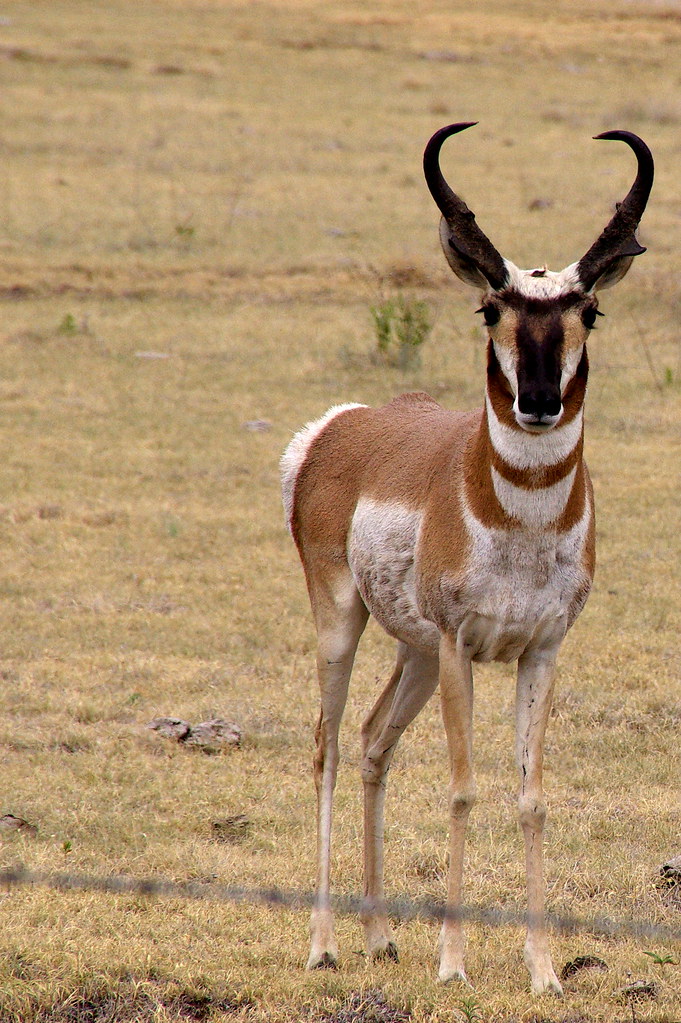
Someday I hope to be able to photograph a baby pronghorn antelope.  Until then, here are a few of my favorite pronghorn antelope photographs.

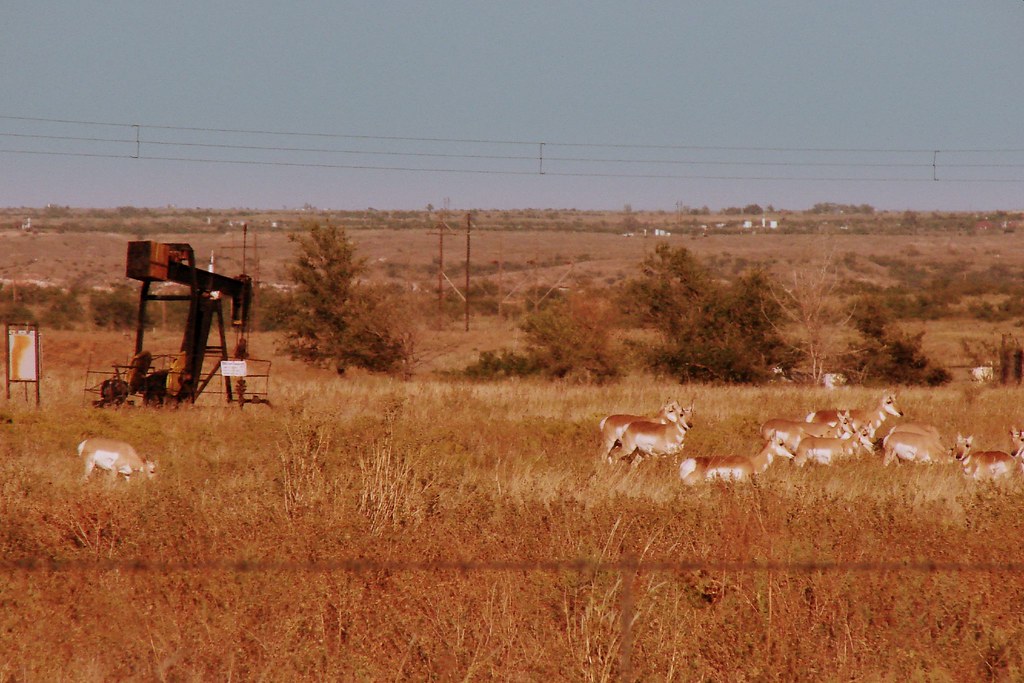
The following photo is definitely NOT my best pronghorn photo, but it’s the first chance  I ever had to photograph pronghorns.  My camera equipment has improved significantly since this photo was taken.

Home on the range...

He's Back, Mom :-)

Continue reading

Mona Lisa

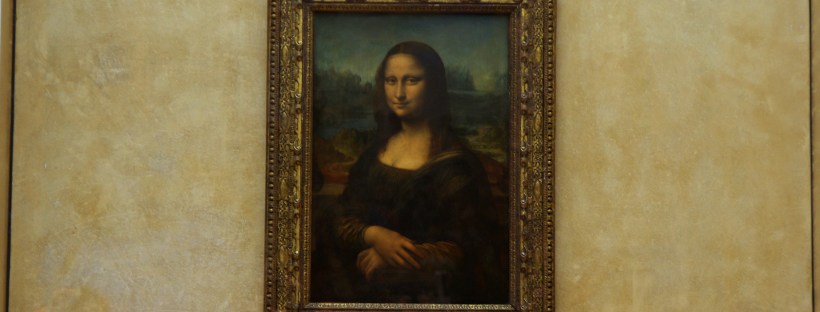
It just didn’t seem right to write a blog post about The Louvre without mentioning the Mona Lisa, so I decided that this painting needed its very own post.

We arrived at The Louvre just after it opened and made a beeline to the Mona Lisa.  The museum gets more crowded throughout the day, and the Mona Lisa is the main-attraction, so we wanted to go ahead and get that out of the way.  Given how crowded the Mona Lisa Room was when we arrived, I’m glad that we didn’t wait until later in the day to see it.

Leonardo da Vinci painted the Mona Lisa between 1503 and 1506 (while living in Florence), though several people believe that he continued working on it as late as 1517 (while he lived in Ambois).  The Mona Lisa is an oil painting on a white, Lombardy poplar panel.  Though much mystery used to surround the painting, it seems to be fairly well accepted that the Mona Lisa is a portrait of Lisa del Giocondo, a member of the Florence & Tuscany-based Gherardini family.  Her husband was Francesco del Giocondo, a Florentine silk merchant.  The Mona Lisa is currently valued at $782 million USD.

Seeing the Mona Lisa without a huge crowd present just wasn’t a possibility, so I decided to embrace the craziness and tried to take pictures that captured the experience of seeing the Mona Lisa along with hundreds of other tourists.

When you enter the Mona Lisa Room, this is what you see.  There are several other paintings in the room, but we didn’t take time to see them because there were too many people in this room for our liking.

After you wade through some of the people, you’re able to get a glimpse of the Mona Lisa.  I thought that this photograph of someone taking a picture of the Mona Lisa with an iPhone would be a fun picture to look back on in 30 – 50 years (will iPhones still be around then?)!

A few people, like me, still use stand-alone cameras to take pictures.  Notice the lady on the right-side of the photo taking a selfie with the Mona Lisa.  I’m always amazed at the amount of people taking selfies with artwork.  To each, his (or her) own.

I tried to be polite and spent several minutes waiting for a clear path to the front of the group of people staring at the Mona Lisa, but it became evident that manners weren’t going to get me very far.  Sooooo…I gave up and started acting like everyone else and pushed my way to the front so that I could get an unobstructed photograph.  They don’t let you anywhere close to the painting, so this was the best I could get.

Mona Lisa
by Leonardo da Vinci
1503 – 1506, oil on white poplar panel

After I managed to get out-of and away-from the crowd, I snapped this photo of people viewing the Mona Lisa.  Not exactly the calm, serene, life-altering experience one would hope for while viewing the most popular painting in the world.

The painting across from the Mona Lisa is The Wedding at Cana (1563) by Paolo Veronese.  It is the biggest painting in The Louvre.  This painting depicts the New Testament wedding during which Jesus performed His first miracle by turning water to wine.  The painting hung in the refectory of a Benedictine monastery in Venice for 253 years at which point it was stolen by Napoleon (in 1797) and shipped to Paris.  The painting measures 21.8 ft by 32.5 ft.

I took one last shot of the crowd and the Mona Lisa before we (gladly) vacated the Mona Lisa Room.

The Louvre – Sculptures & Statues

9qeem53

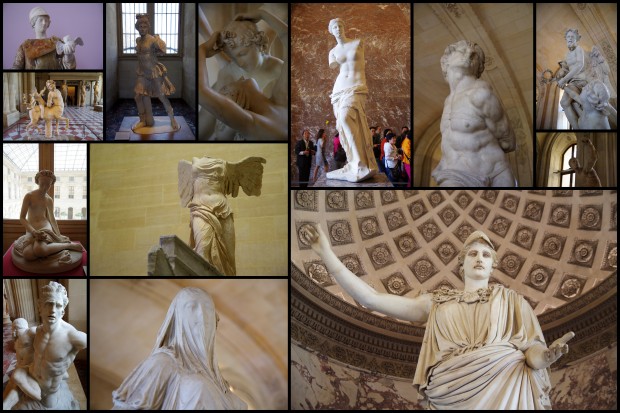
I’ve been debating whether or not to write a post about our visit to The Louvre.  I have to admit, I’m struggling with whether or not a post consisting solely of photographs of artwork will be interesting.  In the end, I decided to start off with photographs of statues.  Statues seem to photograph better than paintings…maybe because they’re three dimensional…or maybe because I have a soft spot for statues.  How sculptors can take something rock-solid and turn it into something that looks flowing and full of life is beyond me.

The Louvre is HUGE, and I’m honestly not sure how many hours we spent there.  We purchased our tickets ahead of time, which allowed us to wait in a shorter line than the normal line.  We had a general game plan as far as the things that we knew we had to see — The Mona Lisa, Winged Victory, and Venus de Milo.  It was a rather short list because I’m not terribly familiar with artwork from the time period featured at The Louvre.  I read several different “10 Things You Must See at The Louvre” articles before our trip, and most of the items in those lists didn’t really interest me.

I’m fairly detail-oriented, so in addition to taking photographs that show entire statues, I also like to take up-close photographs of certain portions/parts of the statue that caught my attention.  I think this love of and appreciation for detail is part of what fuels my interest in statues.  The building that houses The Louvre is visible in the background of several of photographs in this post — be sure to take in the beauty of the building itself!

Disclaimer: Nearly all of the information placards accompanying art on display in The Louvre are entirely in French.  I did my best to correctly identify the titles, authors, materials, and time period of each of the statues showcased in this post.

Here is a link to an Imgur photo album containing all of the photos in this post.

Winged Victory of Samothrace
by Pythokritos of Lindos
2nd Century B.C., marble

hquhilbl
Diana of Versailles
Bronze

Venus de Milo
by Alexandros of Antioch
Between 130 & 100 B.C., marble

Continue reading

Jardin des Plantes

eoqyofp

After leaving Luxembourg Gardens, we walked 1.4 miles to the Jardin des Plantes.  The Jardin des Plantes is a large botanical garden located just to the east of the Seine in the 5th arrondissement of Paris.  It covers 69.2 acres and was the first botanical garden to be created in Paris.  Though it was founded in 1626, it did not open to the public until 1640.  It was originally planted by Louis XIII’s physician, Doctor Guy de la Brosse as a medicinal herb garden.

I am currently reading All the Light We Cannot See by Anthony Doerr, and I’ve enjoyed the many references to the Jardin des Plantes.  I can picture Marie-Laure and her father traipsing through the gardens on their way to the Museum of Natural History where he works as the master of locks.  If you, too, are reading this wonderful book, I hope that my photographs will help bring the Jardin des Plantes to life for you.

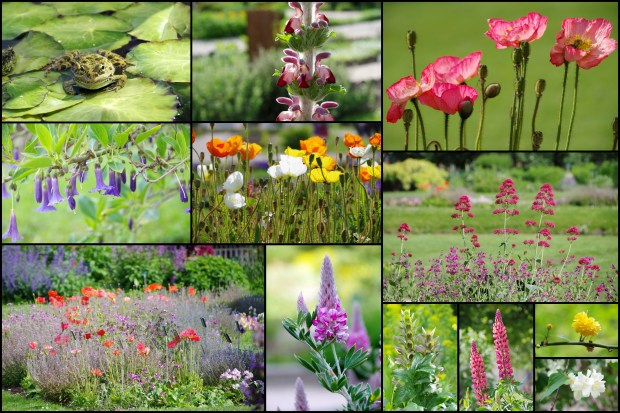
There were many plants that I had never seen before, and I didn’t do a very good job of taking photographs of all of the name placards (shame on me), so there won’t be much information to share in the post — only pictures of pretty flowers.

Here’s a link to the Imgur photo album containing the photographs in this post.

e69ugob
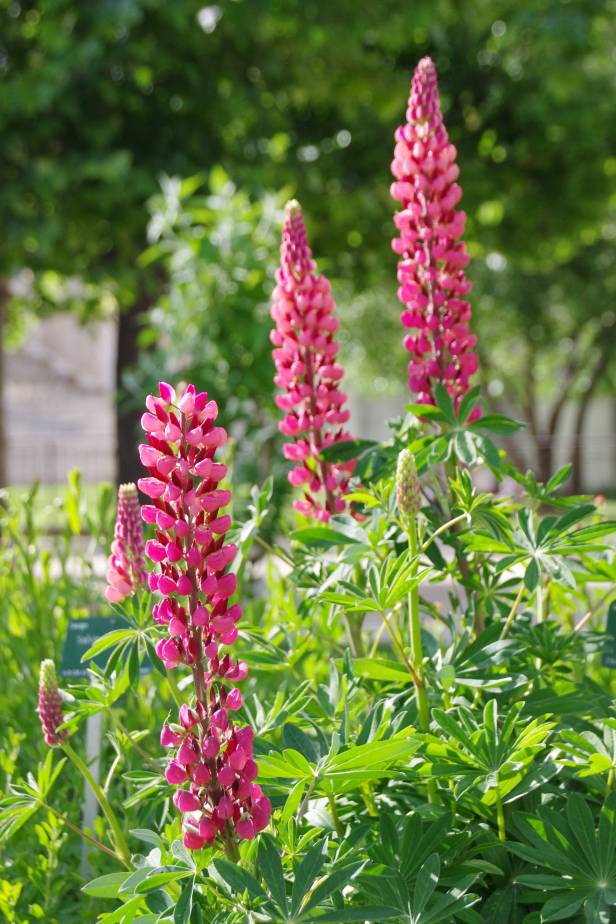
Russell Hybrid Lupines

Continue reading

Walking The Streets of Paris

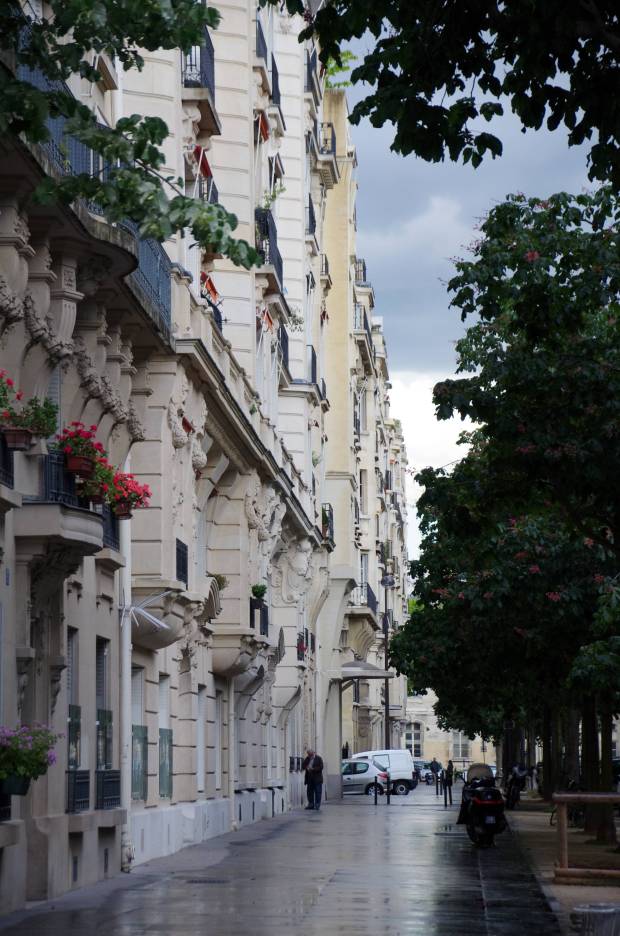
When Bryan and I visit foreign countries, we tend to do a lot of walking.  If our destination is within three miles or so of our starting point, we’ll choose to walk over taking public transportation because when you walk you get to see things (metros don’t tend to be all that scenic)…time spent walking is never wasted, it is invested.

We thoroughly enjoyed walking around Paris during May.  The weather was pleasant, everyone was happy, flowers were blooming in window-boxes, and signs of life were everywhere.  I don’t really know the exact locations of most of these photographs, so this post won’t contain much writing.  Even still, I wanted to share these pictures with you because the streets are what made me fall in love with Paris.

“Not all those who wander are lost.”
-J.R.R. Tolkien

Here’s a link to the Imgur photo album containing the images in this post.

pxzefo4
Rue Cler Neighborhood

Continue reading

Sainte-Chapelle

St. Chapelle Collage

Sainte-Chapelle (Holy Chapel) is a medieval Gothic chapel.  Its construction began after 1239, and it was consecrated in 1248.  France’s King Louis IX commissioned it so that he would have a place to store his collection of passion relics.  The cathedral was damaged during the French Revolution and restored during the 19th century.  The cathedral is said to be a prime example of Rayonnant Gothic architecture.  It has one of the best collections of 13th century stained glass in the world.

We purchased our tickets for Sainte-Chapelle ahead of time to decrease the amount of time that we spent waiting in line.  I got pretty good at navigating websites in French in order to purchase tickets in advance.  We attempted to visit the chapel on our first day in France; however, we were turned away and notified that the chapel was closed because they were in the process of removing tarps from some of the windows that had just finished being restored.  The man that we spoke with told us that we should come back the next day because the work would be finished — talk about good timing!  We went to Sainte-Chapelle on the same day that we visited Musee d’Orsay.  The stained glass was beautiful, and we were provided with a guide so we were able read about the Bible stories the stained glass is depicting — it was nice to actually know what we were looking at for a change.

If you’re planning on taking photographs in Sainte-Chapelle, you may want to consider going on a day when there is lots of sunshine in the forecast, as the chapel is dimly lit.  If you want to get good photographs of the outside of the chapel, consider bringing a fish-eye lens; there are other buildings in close proximity to the chapel that make it difficult to get good photographs without a wide-angle lens.  Sadly, I did not have my fish-eye lens with me at the time.

Here’s a link to the Imgur photo album containing the photos in this post.

b2wh4hpCreepy Gargoyle

Continue reading

Jardin du Luxembourg

France4Bryan and I had traveled to Europe twice before our trip to France, and both trips were during December.  I thoroughly enjoyed our December trips to Germany; however, it seemed to me that Paris would be perfect during spring, so we chose to visit France during May.

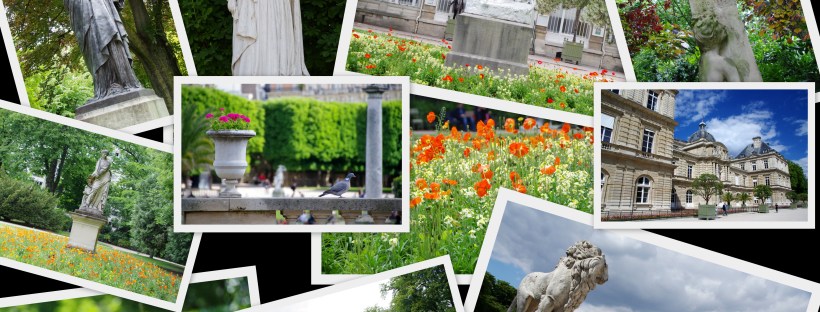
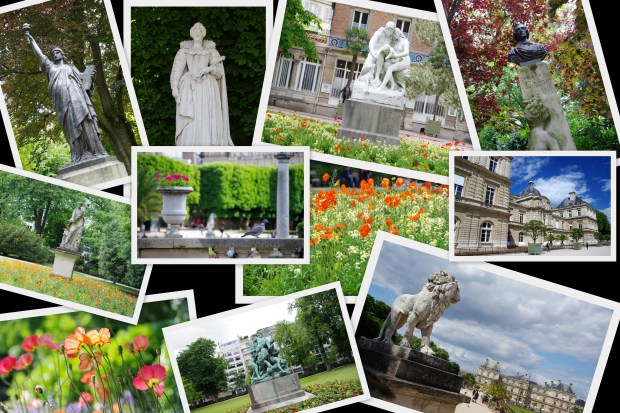
Prior to the trip, I researched parks and gardens in Paris and knew that I wanted to make time to visit Luxembourg Garden.  We went to Luxembourg Garden on our second day in Paris — the same day that we visited Musee d’Orsay and St. Chapelle.  Luxembourg Garden did not disappoint!  It was full of people, statues, flowers, and life!  We even got to watch a few rounds of pétanque (which I regret not taking any photos of), a game we read about before our trip.

Marie de’ Medici, a native of Florence and the wife of King Louis XIII, began creating Luxembourg Garden in 1612.  She wanted something to remind her of Florence.  Today the park is owned by the French Senate and occupies 60 acres.  It is home to 106 statues, of which I photographed a mere 17.  We spent a couple of hours at the park and didn’t even come close to seeing everything.

qbrt2rm
Statue of Marie de’ Medici

Here’s a link to the Imgur photo album containing the photos in this post. Continue reading

The Cliffs of Étretat

France3

Étretat is a small town (population 1,461 + tons of tourists) in the Haute-Normandie region in the northwest part of France.  It is located on the English Channel along a portion of the coast called Côte d’Albâtre (Alabaster Coast).

During our planning stages we had discussed potentially visiting Étretat and had ultimately decided not to because we wanted to be able to spend more time in Bayeux.

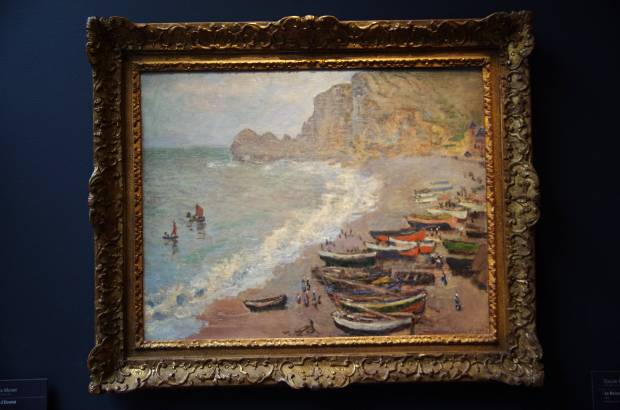
We were sitting in the parking lot at Monet’s Gardens in Giverny, getting the GPS ready to go and made a rare, spur-of-the-moment decision to not follow our itinerary.  Instead of heading to Bayeux, as planned, we decided to drive to Étretat.  We had seen a couple of paintings featuring  Étretat (one by Claude Monet and another by Gustave Courbet) at the Musée d’Orsay, and the falaise d’Etretat (the cliffs of Étretat) were calling our name.  Visiting Étretat was the most spontaneous thing that my husband and I did during our very-well-planned-trip-to-France.

24iuvhcGustave Courbet (1870) – La falaise d’Étretat après l’orage
(The Étretat Cliffs After the Storm)

aba77apClaude Monet (1883) – Étretat: la plage et la porte d’Amont
(Etretat, the beach and the port of Amont)

Here’s a link to the Imgur photo album containing the photos from this post.


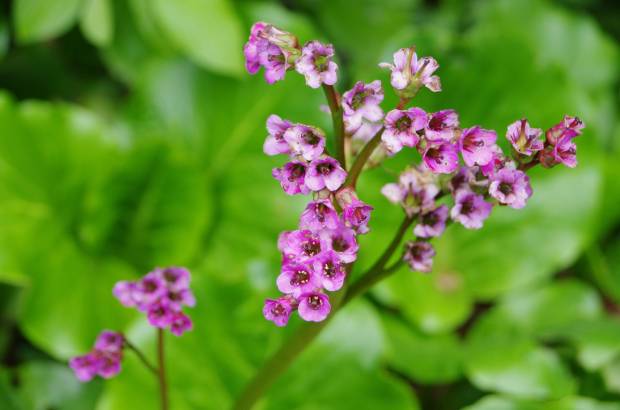
We arrived in Étretat and parked just outside of town.  The walk into the town was beautiful.  I was excited to see some wildflowers I had never seen before.  Flowers seem to grow everywhere in France.

bws0ljp

Continue reading

The Eiffel Tower

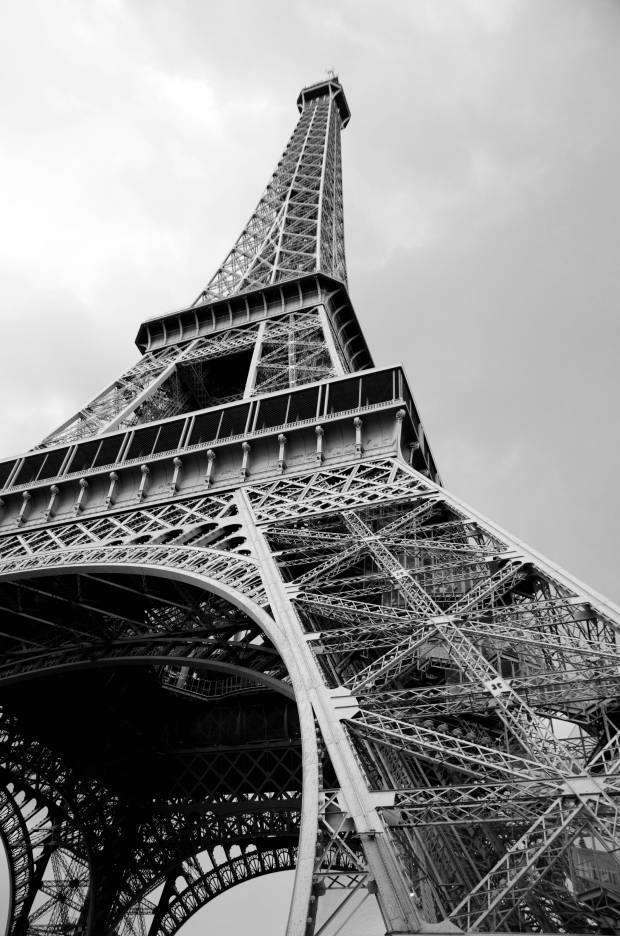
I haven’t been doing  a very good job of posting regularly to my blog but did want to go ahead and get at least one more post out before 2016.  The Eiffel Tower is definitely a site to behold!  The Eiffel Tower was built for the 1889 World’s Fair; it was not supposed to be a permanent structure.  It was supposed to be demolished in 1909 but was turned into a radio tower and was saved.  It took 300 workers, 18,038 pieces of wrought iron and 2.5 million rivets to build the Eiffel Tower.  When the Eiffel Tower was built, it passed the Washington Monument as the tallest man-made structure.  At 1,063 feet tall, it was the tallest man-made structure until 1930 when the Chrysler Building was built.  During WWII, when Hitler visited Paris, the French cut the lift cables on the Eiffel Tower so that Hitler would have to climb the steps if he wanted to reach the top.  The Eiffel Tower Wikipedia article is worth reading.  The History Channel website also has a good article on the Eiffel Tower.

The first glimpse that I got of the Eiffel Tower as we were walking through the city was magical — it made being in Paris finally feel REAL.  It was neat to walk around the city and be able to see the Eiffel Tower peaking in and out between buildings.

We chose not to go up into the Eiffel Tower while we were in Paris for two reasons — the lines were very long (and our time was limited), and you can’t see the Eiffel Tower if you’re in it.  In order to make the best use of our time we chose to only “see the city from up high” from one place, and that was the towers at Notre Dame, which offered a great view of the Eiffel Tower.  If we had time to go up into another building/structure, we would have gone up into the Montparnasse Tower.

During our short stay in Paris we were able to see the Eiffel Tower against many backgrounds (stormy skies, sunset, night) and from many different perspectives.  Here are some of my favorite Eiffel Tower photographs.

n88pxok

Continue reading